
Top Guest Posting Services 2026: ranked marketplaces, managed outreach, and safer publishing rules
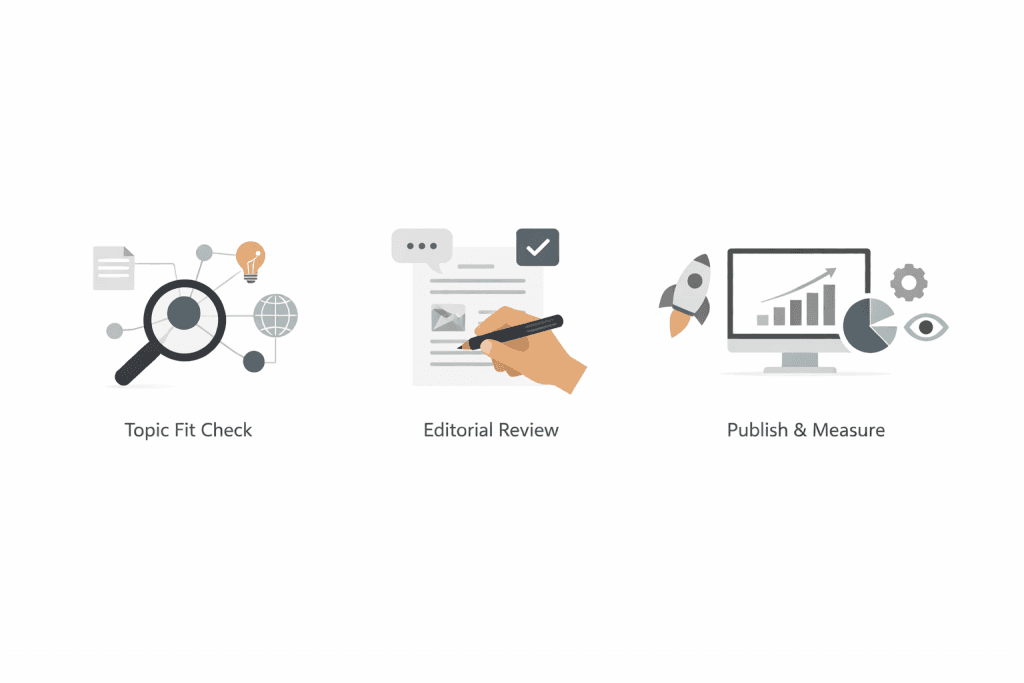
Searching for the Top Guest Posting Services 2026 is no longer just about “who sells the most links.” In 2026, guest posts sit under a brighter spotlight: search engines care more about intent, topical fit, and editorial control, while publishers are far less willing to host low-effort “parasite” content. The result is simple: the best guest posting services are the ones that help you publish content that looks and behaves like it belongs on the host site.
This guide ranks major guest posting platforms (marketplaces and managed services), explains what’s changed since Google’s site reputation abuse policy, and gives a practical decision framework—so you can pick the right tool for your budget, risk tolerance, and scale.
What changed for guest posting in 2026
Guest posting didn’t “die.” But the sloppy version of it—thin third-party pages, weak editorial oversight, and overly commercial sections bolted onto otherwise trusted sites—has become much riskier. Google’s site reputation abuse policy shifted the lens from “guest posts” to “third-party content hosted mainly to borrow a site’s ranking signals.” Since enforcement began rolling out in 2024, many publishers have audited or removed low-quality partner sections and tightened their rules: topical fit, real editing, transparent labeling where appropriate, and restrained linking. For 2026, assume every guest post is third-party content under scrutiny, and choose services that make “publish like an editor” the default workflow—not an afterthought.
In practice, the safest guest posting in 2026 follows a few recurring rules:
- Topical alignment: every guest post should fit the host site’s core themes and audience.
- Editorial control: hosts should edit, fact-check, and reject content that’s off-topic or overly promotional.
- Transparency: sponsorship, incentives, and author context should be clear when applicable.
- Link restraint: a small number of contextual links beats keyword-stuffed anchor patterns.
- No “guest post islands”: segregated subfolders/subdomains packed with third-party content are a red flag.
So when comparing services, prioritize platforms that help you filter for topical relevance, evaluate site quality, and run a workflow that feels editorial—not transactional.
Top Guest Posting Services 2026: ranked list
The ranking below blends different models: credit-based exchanges, self-serve marketplaces, and managed outreach. The “best” option depends on whether you need global reach, strict niche matching, hands-on editorial collaboration, or a workflow that reduces cash spend.
1) pressbay.net — credit-based sponsored article marketplace & guest post exchange
pressbay.net is positioned as a guest post marketplace that uses credits instead of direct per-order cash payments. The practical value of a credit model is predictable swapping: publishers earn credits by publishing content for others, then spend those credits to promote their own projects on other sites. For advertisers and agencies, this can be a way to keep campaigns moving even when cash budgets are tight—while still operating inside a marketplace workflow where listings can be moderated and verified.

Why it ranks #1 for 2026: the platform’s positioning aligns well with “safer” guest posting rules—because it encourages repeatable workflows, clearer expectations, and a marketplace where listings can be moderated and verified. It’s also naturally compatible with link restraint: credits reward quality publishing, not mass production.
- Best for: publishers who want to monetize responsibly; marketers who want scalable placements without constant cash spend.
- Strengths: credit exchange model, multi-language marketplace approach, workflow framing around verified listings and transparent expectations.
- Watch-outs: as with any marketplace, results improve when you use strict topical filters and write briefs that fit the publisher’s audience.
2) linkhouse.net — link building marketplace with tools and structured ordering
linkhouse.net presents itself as a link building and content marketing platform with a marketplace plus supporting tools to plan and manage campaigns. If your team wants a structured process (finding offers, placing guest posts or link insertions, and managing orders) and you prefer a platform that explicitly frames link building as a system, Linkhouse is a strong option.

- Best for: SEO teams that need a repeatable marketplace workflow and campaign management support.
- Strengths: marketplace positioning plus operational tools for planning and management.
- Watch-outs: treat “inventory” as a starting point—your real advantage comes from strict niche fit and editorial quality, not sheer volume.
3) whitepress.com — large sponsored article publication platform with automation features
whitepress.com is widely known in Europe as a platform for publishing sponsored articles and distributing content with advanced search and automation features. If you run multilingual campaigns, need a broad choice of publishers, and want the “catalog + filters + ordering” workflow, WhitePress is a familiar choice for many SEO and content teams.

- Best for: teams that want a mature sponsored content marketplace style experience, especially across European markets.
- Strengths: marketplace distribution focus and workflow automation.
- Watch-outs: the biggest catalogs contain both great and mediocre options—tight screening matters more than ever in 2026.
4) collaborator.pro — PR distribution marketplace bridging advertisers and site owners
collaborator.pro positions itself as a PR distribution marketplace for guest posting, aiming to simplify collaboration between advertisers and publishers. The core appeal is the marketplace framing: find relevant donor sites, order placements, and run distribution-like campaigns that combine PR and SEO goals.

- Best for: marketers mixing SEO + digital PR, especially when you need a marketplace-style catalog and distribution process.
- Strengths: PR distribution positioning and catalog approach.
- Watch-outs: use editorial briefs and topical guardrails to avoid “generic guest post” footprints.
5) prnews.io — sponsored media placements for PR, mentions, and global reach
prnews.io focuses on sponsored media placements and positions itself around brand building, authority, and broad geographic coverage. If your goal is to appear on reputable outlets for brand recognition, reputation management, or global PR-style distribution (with SEO as a side benefit), this model is different from classic guest post marketplaces.

- Best for: brands that want PR-style placements, mentions, and visibility beyond pure link building.
- Strengths: global reach and “pick a publisher, submit text, get published” workflow.
- Watch-outs: align placement intent with business goals—PR placements are often about credibility and reach, not only anchor text.
6) adsy.com — self-serve marketplace with filters and multi-country inventory
adsy.com markets a self-serve flow for buying blog posts and selecting sites based on various metrics and filters. If you want a straightforward “browse inventory, filter by metrics, order” experience and you run campaigns across multiple countries and languages, this is a flexible toolset—especially for teams that already have clear briefs and topic clusters prepared.
- Best for: performance-driven SEO teams that want self-serve filtering and fast ordering.
- Strengths: marketplace inventory orientation and filtering emphasis.
- Watch-outs: don’t let metrics replace relevance—topical fit and editorial review are the risk reducers in 2026.
7) authority.builders — managed guest posting service with outreach focus
authority.builders sells a managed guest posting service built on outreach and placement, with packages and an inventory concept for advanced users. This model is closer to a traditional service provider than a pure marketplace: you’re paying for execution (sourcing, relationships, and fulfillment), not just access to listings.
- Best for: busy teams that want outsourcing and prefer a managed workflow over self-serve marketplace shopping.
- Strengths: outreach-driven positioning and packaged services.
- Watch-outs: insist on topic alignment, review drafts, and track how placements fit your content strategy—outsourcing doesn’t remove responsibility.
Other notable guest posting options to consider
Beyond the ranked list, many agencies still use custom outreach, niche community partnerships, and editorial collaborations that don’t run through a single “platform.” In 2026, these bespoke routes can outperform marketplaces when:
- you have strong subject-matter experts and can pitch unique angles;
- your niche has a tight cluster of respected sites (where relationships matter);
- you want recurring columns or true editorial partnerships rather than one-off placements.
How to choose a guest posting service in 2026?
The best choice comes down to your constraints. Use the checklist below to quickly map which model fits you, then pick a platform inside that model.
Marketplace vs managed service: quick comparison
| Model | What you get | When it works best | Main risk in 2026 |
|---|---|---|---|
| Self-serve marketplace | Catalog, filters, ordering workflow | You can write strong briefs and screen publishers tightly | Buying based on metrics alone, ending up with off-topic placements |
| Managed outreach service | Execution: outreach, relationships, placement delivery | You need time savings and consistent delivery | Losing editorial control; accepting “templated” content footprints |
| Credit-based exchange | Earn/spend internal credits for placements | You want to reduce cash spend and build repeatable collaboration loops | Spreading too wide without topical guardrails |
| PR-style placement marketplace | Sponsored media visibility and brand mentions | You want credibility, reach, and narrative control | Chasing links instead of aligning with PR outcomes |
The 10-point screening checklist (use this before you order)
- 1) Topic map match: does the host site naturally cover your topic cluster?
- 2) Audience overlap: would a real reader of that site care about your article?
- 3) Editorial workflow: does the publisher actually review and edit content?
- 4) Clear sponsorship handling: are rules for sponsored content transparent and consistent?
- 5) Link policy: are link limits reasonable, with sane anchor expectations?
- 6) Content uniqueness: can you publish something non-generic (original angle, data, expertise)?
- 7) Placement integration: will the article live in a normal category, not an isolated “guest” directory?
- 8) Long-term stability: will the page likely remain indexed and maintained?
- 9) Reputation check: does the site have a consistent history in your niche (not sudden topic pivots)?
- 10) Measurement plan: what do you measure—rankings, referrals, conversions, brand searches?

Playbooks for agencies, in-house teams, and publishers
In-house marketing team: build topical authority without scaling risk
In-house teams often have the best advantage in 2026: they know their product, have real expertise, and can create genuinely useful articles. Use that advantage to avoid the “template footprint” that triggers scrutiny.
- Start small: pick 5–10 target sites that match your core topics and publish one strong article per site.
- Use expert angles: case studies, data stories, or unique process write-ups outperform generic listicles.
- Keep links minimal: one contextual link is often enough when the article is genuinely valuable.
- Measure beyond rankings: referral traffic, brand search lifts, and sales conversations often reveal value earlier.
SEO agency: systematize quality (not volume)
Agencies win when they systematize. The trap is systematizing only output volume. In 2026, you want standardized quality controls instead:
- Standardize a brief template: audience, angle, claims to support, required sources, link limits, and “what not to do.”
- Create a publisher scoring rubric: topical match, editorial strictness, history, placement integration, and stability.
- Rotate formats: tutorials, expert Q&A, mini-research, opinion (clearly labeled), and comparisons—avoid repeating one pattern.
- Audit quarterly: check indexation, link changes, and whether placements are drifting into isolated sections.
Publisher: monetize guest posts while protecting reputation
If you run a site that accepts guest contributions or sponsored articles, 2026 is about protecting your long-term trust. That means clear rules that prevent third-party content from becoming a “separate business inside your domain.”
- Define your topical boundaries: create a public list of allowed themes and disallowed categories.
- Maintain editorial control: edit heavily, fact-check, and reject overly promotional drafts.
- Limit outbound links: keep links contextual; avoid guaranteed anchors and exact-match demands.
- Integrate content: publish guest pieces in normal categories and navigation, not in a segregated directory.
- Review your archive: periodically update, improve, or remove content that no longer meets standards.
Common pitfalls and a safer guest posting checklist for 2026
Most guest posting “problems” in 2026 are pattern problems. One weak article rarely kills a site. But a repeatable footprint can. Watch for these common mistakes:
- Publishing off-topic clusters: a sudden wave of unrelated commercial niches is a classic signal of third-party exploitation.
- Thin content with heavy links: if the article exists mainly to place anchors, it’s risky for both sides.
- Separate subfolders for guest posts: isolated “partner” zones look like bolt-on SEO projects.
- Over-optimizing anchors: branded or descriptive anchors are usually safer than exact-match phrases.
- Skipping human review: unedited content is an easy way to create low-quality patterns at scale.
If you want a single rule of thumb for 2026, it’s this: every guest post should be defensible as a user-first editorial decision, even if search rankings did not exist.
Conclusion
The “best” guest posting service in 2026 is the one that fits your workflow and keeps you on the safe side of editorial intent. Marketplaces make sense when you can screen sites and write strong briefs. Managed services help when you need execution and time savings. PR-style placement platforms help when credibility and narrative matter. And credit-based exchanges can keep campaigns running without constant cash spend—while still pushing you toward repeatable, moderated collaborations.
Pick your model, apply the screening checklist, and aim for fewer—but better—placements. In 2026, quality is the growth hack.